Posted on 12 June 2026:
Tribondhon: Three Connections of Spirit, City and Nature
In Dhaka, a luminous exhibition titled Tribondhon—Three Connections gathers the visions of three young visual artists: Niharika Awhona Barsaat, Surovi Akter and Fariaz Emran. The name itself suggests a weaving of worlds, a triad of sensibilities that converge into one poetic dialogue.
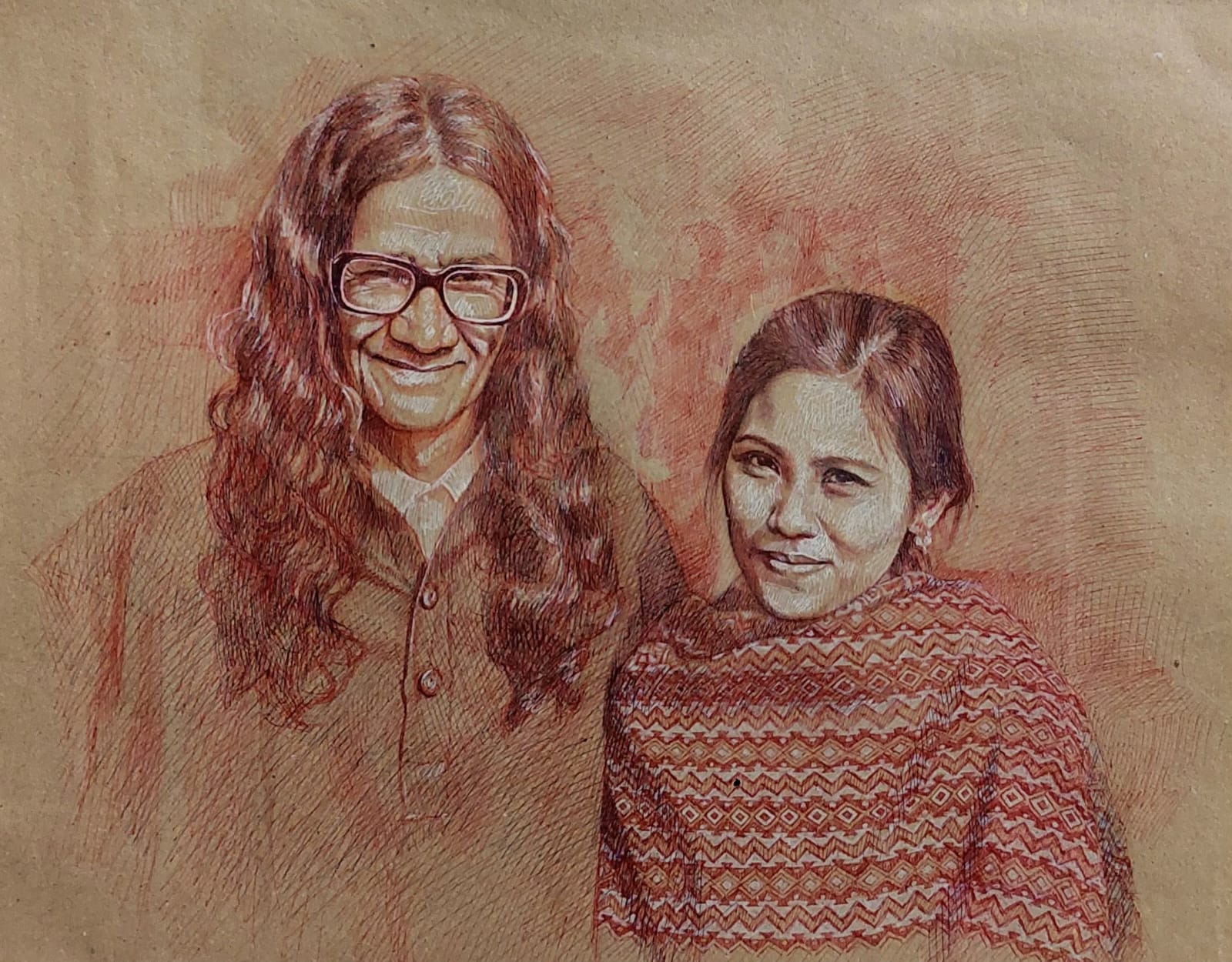
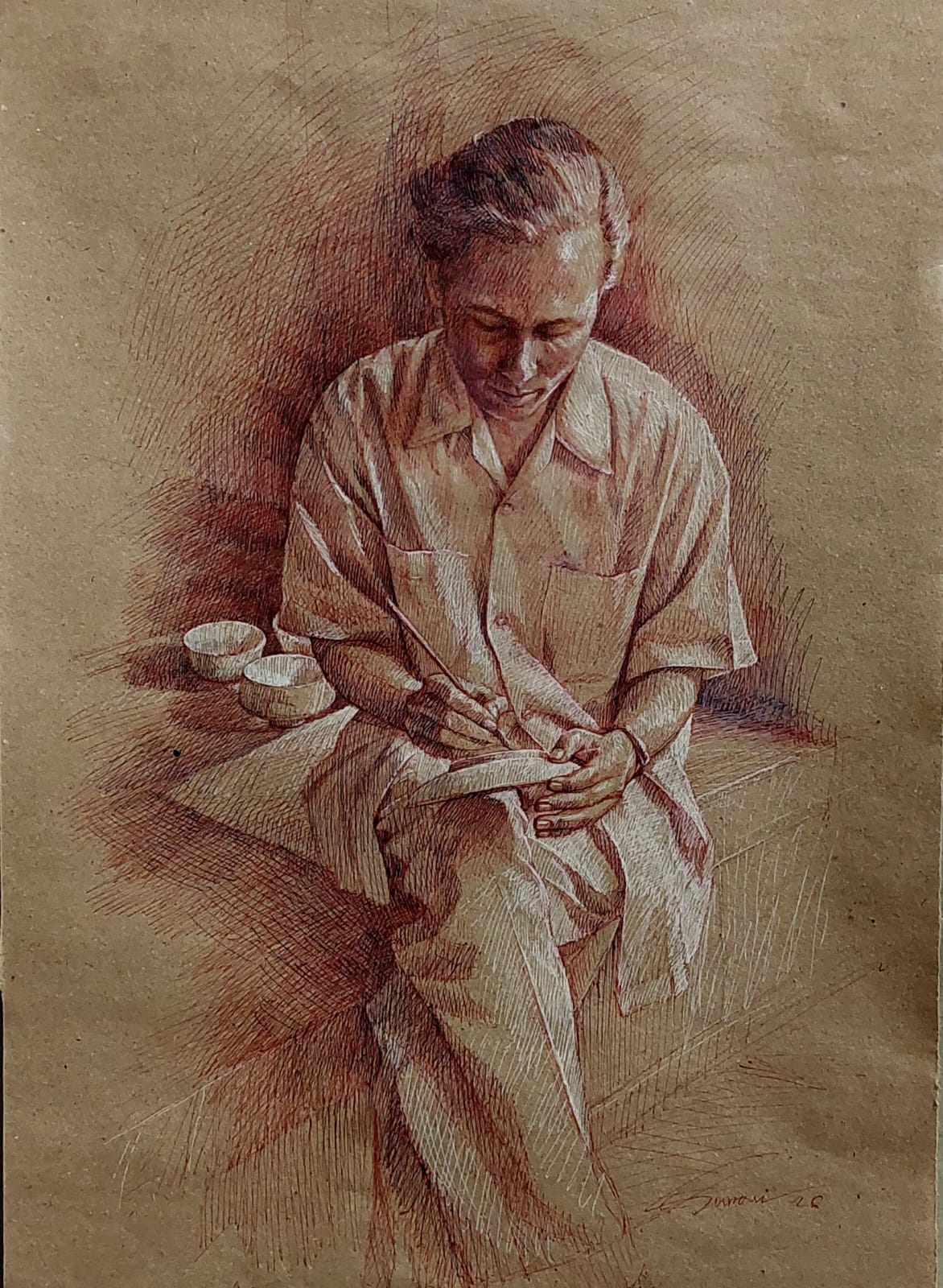
Surovi Akter, with her red ballpoint pen upon brown paper, turns the human eye into a cosmos. Each gaze she renders is not merely anatomical but a spiritual bridge—an intimate passage between souls. Her portraits, sharpened by ink yet softened by colored pencil, pulse with psychological depth, reminding us that drawing can be prayer.
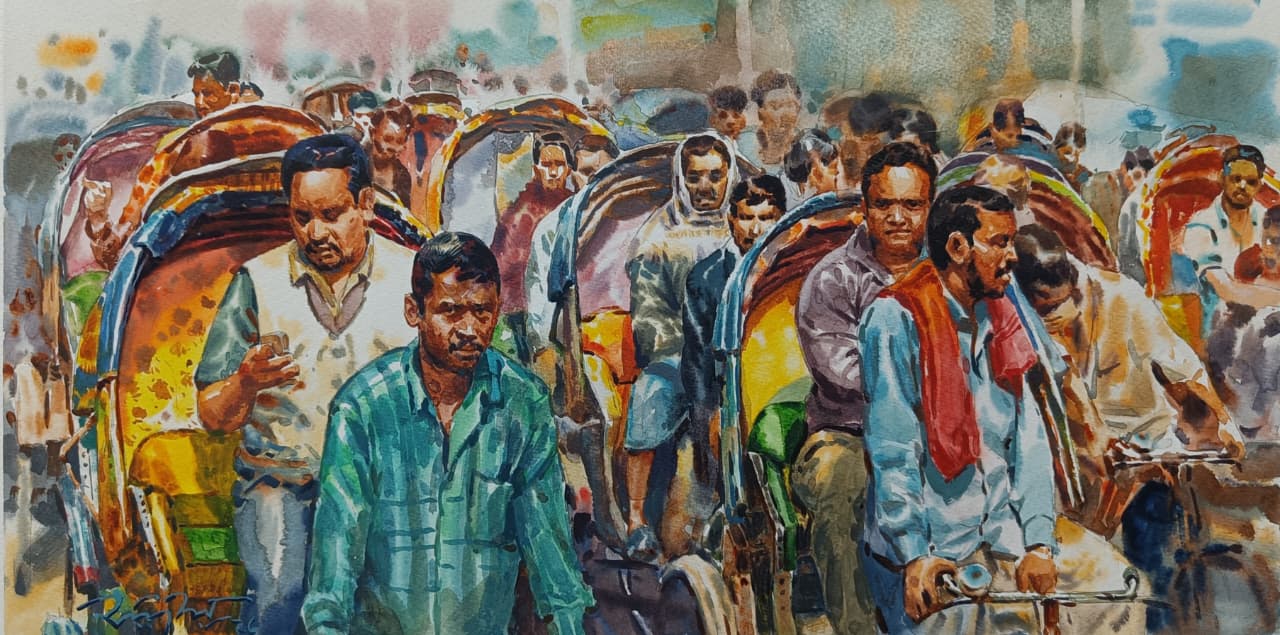
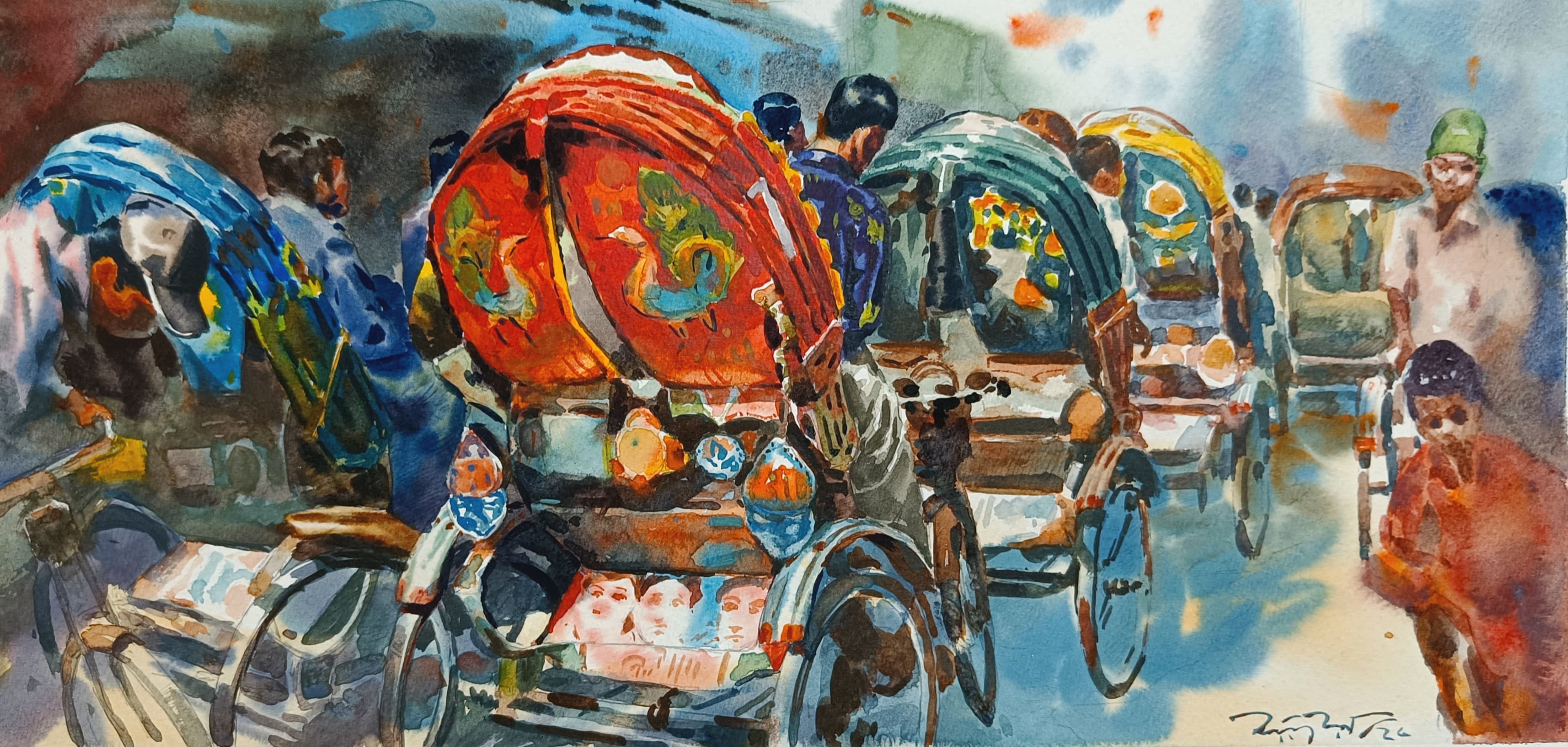
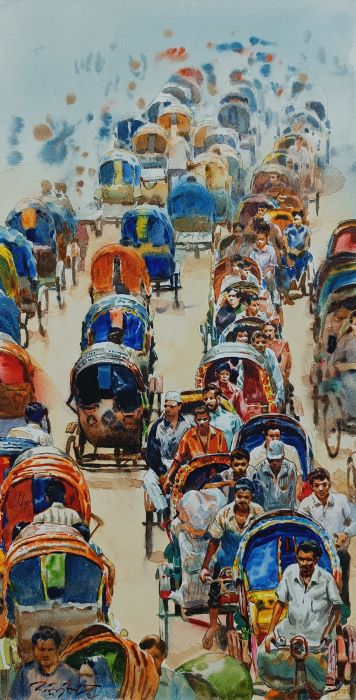
Fariaz Emran’s watercolors breathe the restless rhythm of Dhaka’s streets. Rickshaw pullers and anonymous figures emerge from layered washes, carrying untold stories in fleeting gestures. His art transforms the urban chaos into meditations on identity and awareness, where the street itself becomes a temple of reflection.
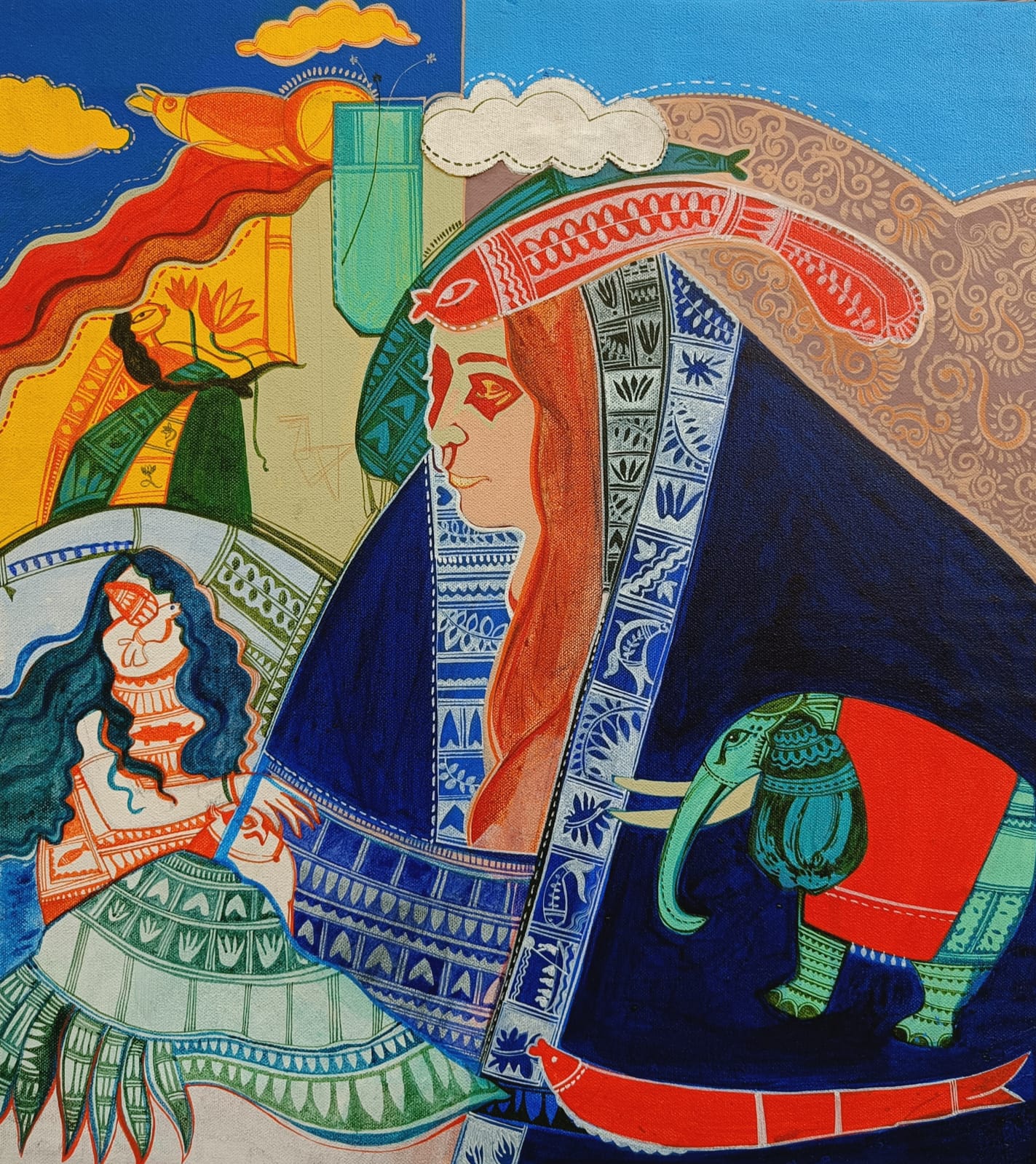
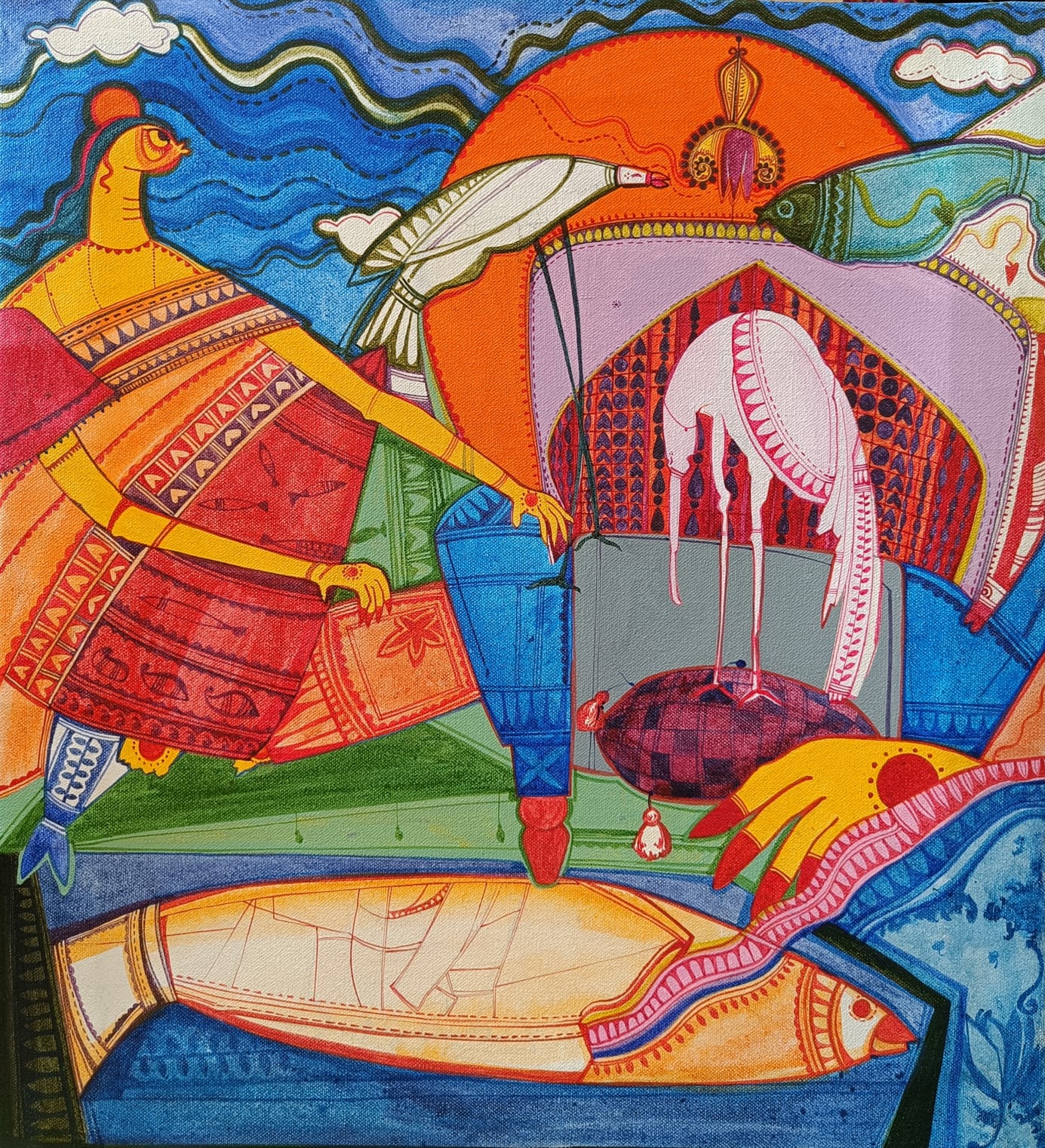
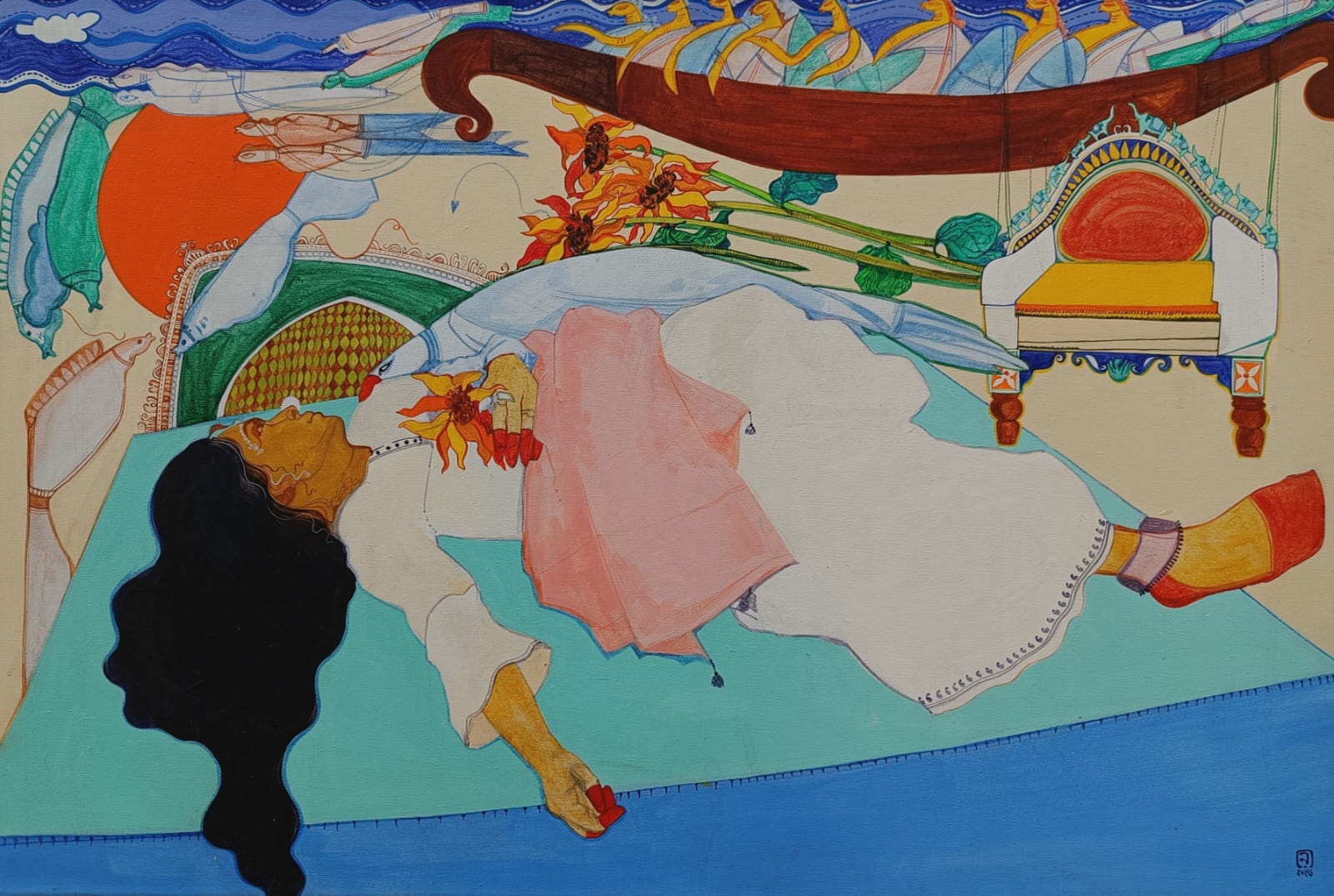
Niharika Awhona Barsaat, through translucent layers of acrylic and watercolor, invokes the feminine energy of nature. Birds, trees, and women entwine as living metaphors—acts of healing that reveal invisible threads between spirit and earth. In her canvases, a woman becomes a tree, a bird becomes a prayer and nature itself becomes a sanctuary.
Together, these three voices form Tribondhon, a bond of vision and devotion. They invite all into three realms—the human face, the living city and the eternal natural world—reminding us that art is not only seen but felt, not only created but connected.
Tribondhon: Three Connections of Vision and Spirit
Tribondhan —the exhibition brings together three emerging voices from Bangladesh—Niharika Aohona Borsaat, Suravi Akter, and Fariaz Imran—each committed to observing and experiencing the world through their own lens. Their works form a triad of connections: nature, the human face and the living city.
Internationally acclaimed artist Suresh K. Nair of Banaras Hindu University reflects:
“My congratulations and best wishes to these three artists. I am sure this exhibition will be a visual feast for the audience of contemporary Bangladeshi society.”
He recalls the earlier exhibition Transition: Dhaka to Banaras, where Bangladeshi students explored identity, environment and compassion through art inspired by Sufism and poets like Jalal al-Din Rumi, Lalon Fakir and Rabindranath Tagore. He sees Tribondhon as a continuation of that dialogue—between tradition and modernity, personal journey and shared heritage.
On Fariaz Imran, he observes:
“In his current works, Mr. Fariaz adopts a sensitive, realist approach, portraying the lived realities of Banaras through keen observations of daily life. His paintings and drawings serve as poignant visual documentation of socio‑environmental transitions between Banaras and Dhaka.”
On Niharika Aohona Borsaat, he notes:
“Niharika engages with themes of environmental awareness and aesthetic harmony. Deeply inspired by Nakshi Kantha embroidery and textile traditions, she interweaves cultural memory with contemporary ecological concerns.”
And on Suravi Akter, he adds:
“Ms. Surovi’s works reflect Bangladeshi culture and her close community through powerful portraiture. For her, portraiture is both contextual and a way of storytelling—a spiritual practice that allows her to understand the spirit and temperament of the people around her.”
Together, these three artists embody the essence of Tribondhon—Three Connections. Their works are not only visual expressions but also bridges of empathy, spirituality, and cultural resonance, inviting audiences into a shared journey of observation and reflection.
Tribandhan: Three Connections at La Galerie
Curated by Fareha Zeba, the group exhibition Tribandhan opens today, 12 June 2026, at La Galerie, Alliance Française de Dhaka, and will remain on view until 17 June. The inauguration begins at 6 PM, marking the start of a luminous journey into three distinct yet interconnected worlds.
Professor Anisuzzaman, Department of Printmaking, Faculty of Fine Arts, University of Dhaka, reflects on the artists:
“The source of Niharika’s artwork is the natural world: birds, plants and the silent resilience of feminine power. Using herself as both subject and storyteller, she explores healing, transformation, and the invisible bond between women, nature and spirituality.”
On Suravi Akter, he observes:
“Suravi masterfully portrays the pioneers of Bangladeshi art through lines and sketches. Believing that truth is found in human eyes, the focal point of her portraits is always the eyes. Her realistic drawings, created with red ballpoint pens and colored pencils on brown paper, become a spiritual practice bridging minds through emotion.”
On Fariaz Imran, he adds:
“Fariaz grew up in Old Dhaka. His layered watercolor washes bring to life the movement of rickshaws and the congestion of narrow streets. His figurative paintings highlight nameless individuals whose silent gestures and expressions carry untold stories of identity, reality, and spiritual reflection.”
Professor Anisuzzaman concludes with heartfelt encouragement:
“I hope and expect that showcasing the works of these three emerging artists will inspire apprentice and aspiring artists. May your artistic journey continue onward. Many congratulations and best wishes to you all.”
THUS, TRIBANDHAN BECOMES MORE THAN AN EXHIBITION—IT IS A CELEBRATION OF THREE CONNECTIONS: NATURE, HUMANITY, AND THE LIVING CITY, WOVEN TOGETHER IN A SHARED SPIRIT OF OBSERVATION, EMPATHY AND ARTISTIC DEVOTION.