Posted on 6 August 2026:
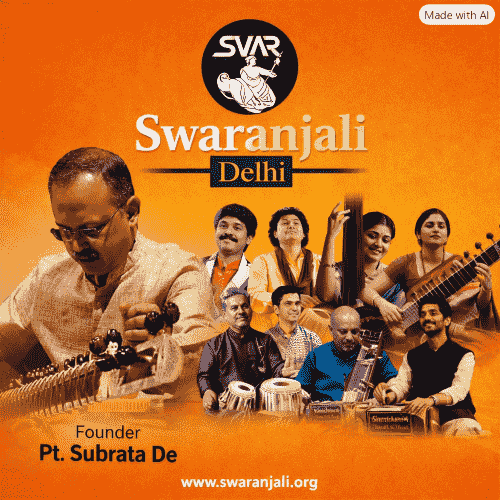
Swaranjali Delhi: Nurturing Indian Classical Music and Dance
In the heart of Delhi NCR, where the pulse of modern life often drowns out gentler rhythms, Swaranjali stands as a sanctuary for India’s timeless musical heritage.
Founded in 2000 by internationally acclaimed sitarist Subrata De, and registered under the Delhi Government’s Society Act in 2003, this institution has spent over two decades weaving together the fundamentals of Hindustani Classical music and dance with the aspirations of young learners — including many from underprivileged backgrounds who might otherwise never find a stage.
Swaranjali’s mission is both preservation and revival. As Indian youth drift toward western influences, and as once-vibrant gharanas quietly fade from memory, the organization works to keep the essence of Raag and Taal alive — not as museum pieces, but as living traditions reimagined for a contemporary audience. Through its Guru-Shishya Parampara training model, it offers underprivileged students not just instruction, but genuine opportunity.
Indian classical music flows like an eternal river –carrying within it the voices of ages.
“Indian classical music carries the world’s most unbroken tradition. Rooted in the Vedas, it blossoms through Raag and Taal, weaving voice, instrument, and dance into one eternal art. Yet, while many of our youth drift under western currents, audiences abroad are awakening to its timeless resonance. The instruments of India, some celebrated, many unsung, remain the soul of this heritage.” — Pandit Subrata De, renowned musician and cultural ambassador, founder of Swaranjali.
Since 2008, Swaranjali’s Gharana Festival has blossomed each year as a sanctuary of classical music amid the restless pulse of metro life in Delhi NCR. Conceived to preserve fading gharanas, it seeks to protect their essence, beauty and lineage from being lost in the tide of modern technology and shifting lifestyles.
The festival is more than performance—it is a vow to uphold purity of form, presentation and discipleship. In its gatherings, the fading echoes of gharanas are rekindled, their traditions carried forward by devoted representatives.
Beyond preservation, Swaranjali nurtures the future: offering a luminous stage for budding artists while celebrating the mastery of established musicians and dancers, weaving continuity into India’s timeless musical heritage.
Colours of India 2026 and intimate Baithaks
Swaranjali, devoted to nurturing the arts, honours maestros and rising talents through projects like Colours of India 2026 and intimate Baithaks across India and beyond. Each festival becomes a luminous bridge, uniting diverse voices into one symphony of heritage, harmony and hope. Its upcoming celebration, in Vijayapuram, Andamans & Nicobar, on 13 August 2026, promises a grand mosaic of music, dance, and folk traditions—from Bengal’s rhythm to Kashmir’s grace, Punjab’s vigour to Odisha’s Sambalpuri fire.

The organization’s calendar brims with cultural landmarks: the annual Gharana Festival since 2008, the Pravasi Bharatiya Sangeet & Nrittya Mahotsava honoring NRI artists, Colours of India, Shraddhanjali, Murchhana, and the DLF Strings & Folk Festival — alongside digital initiatives like Music Without Boundaries and the World Sitar Festival. Partnering with the Ministry of Culture, Sangeet Natak Akademi, ICCR, and leading institutions, Swaranjali has also extended its reach into wellness, using music as therapy through yoga and meditation programs.
At its core, Swaranjali believes that a nation’s roots determine its resilience — and that nurturing its artists is an investment in a more harmonious world.
“I am just a bridge between artist and listener—my duty is to uphold the purest forms of music, nurturing its growth and standard among the young through baithaks, workshops, and lec-dems. For me, music is meditation itself: a path to self‑realisation, peace, harmony, inner balance, and the making of a true human being.” — Pandit Subrata De
Harmony preserved, tradition renewed—Swaranjali’s Gharana Festival keeps the soul alive.