Posted on 16 August 2026:
Chromatic Heritage: Dr. Larissa Noury Unveils the Secret Colors of Russian Architecture
Architecture is often remembered for its geometry, scale and materials, yet its deepest emotional memory is frequently written in color.
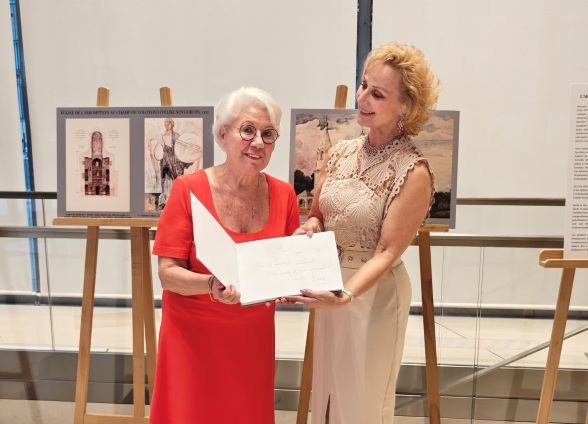
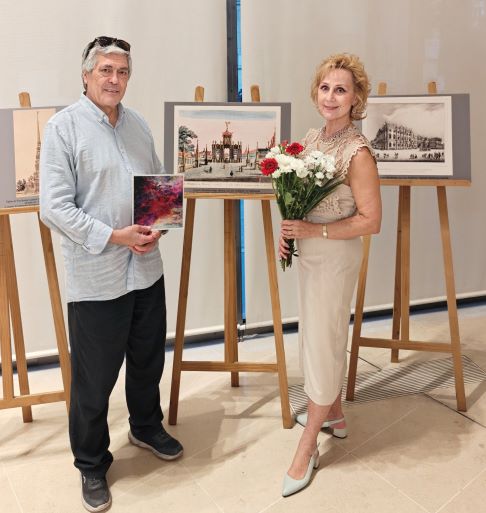
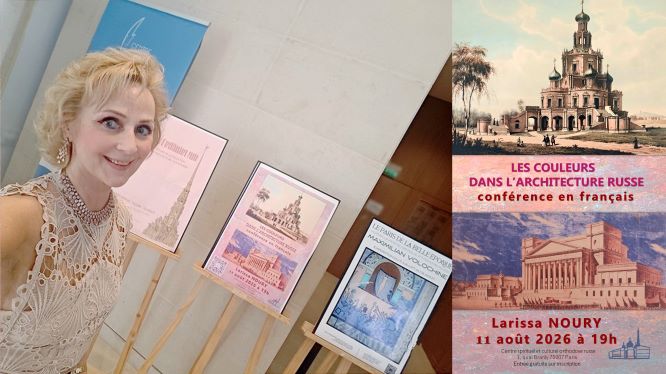
In her historic lecture, “Colors in Russian Architecture” (Les Couleurs dans l’architecture russe), internationally acclaimed architect-colorist and art historian Dr. Larissa Noury led an audience on a journey across time and space, illuminating how polychromy has shaped Russia’s architecture for ten centuries.
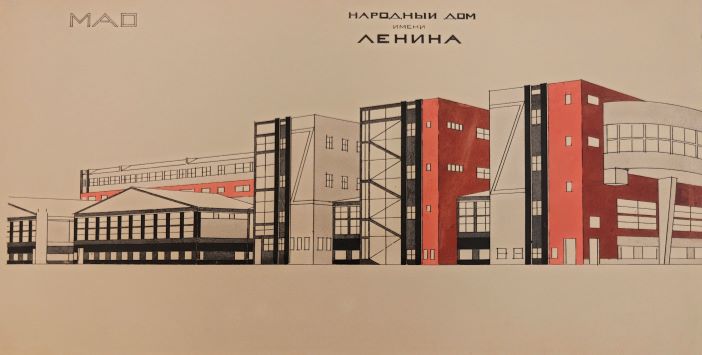
Delivered at the Russian Orthodox Spiritual and Cultural Center of Paris in conjunction with the major exhibition “Ten Centuries of Russian Architecture: Masterpieces from the Collection of the Shchusev State Museum of Architecture,” the lecture bridged archival history with the sensory, symbolic power of color.
A Palette Across Ten Centuries
Dr. Larissa Noury traced a thousand-year arc in which color was never merely decorative, but a spatial and symbolic language. “The color of Russia’s architectural heritage, with its multiple nuances and complex harmonies, is a rich and intercultural phenomenon,” she reflected, tracing its layered strata—from Byzantine influence and Petrine Baroque to Classicism, Eclecticism, Constructivism, and today’s ecological architecture.
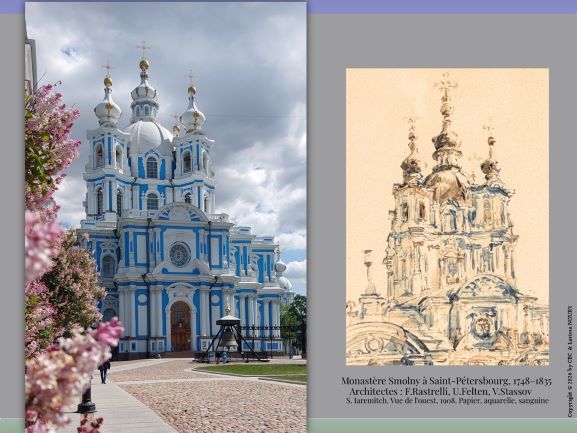
She unfolded this chromatic story in stages: the stark gold and lapis-lazuli of medieval Rus’s onion domes, signaling divine light; the kaleidoscopic izraztsy tiles of Saint Basil’s Cathedral and Naryshkin Baroque churches; the golden ochres and pistachio pastels of Saint Petersburg’s neoclassical facades; and the Avant-Garde’s reimagining of color as dynamic, energetic force.
“Its overall image is created by the layering of different historical strata and styles: Byzantine and Renaissance architectural art, Baroque from the time of Peter the Great and High Baroque, Classicism and Empire, Eclecticism and Belle Époque, Constructivism and Stalinist Neoclassicism, contemporary architecture: functionalism, minimalism, brutalism, high-tech, “ecological” architecture…” Dr. Larissa Noury added.
A Night to Remember
Josiane Gaude, Deputy Mayor of Paris’s 7th arrondissement, praised the evening warmly: “This evening at the Russian Cultural Center we attended a fantastic lecture by Larissa Noury on colors in Russian architecture with a slideshow of superb photos. Bravo Larissa, you should make a book out of your presentation from last night! I think it will be a success!”
Writer and editor Dr. Simon Tedga called it “a one-hour visual journey that magnifies a little-known yet incredibly rich history,” noting how gilded domes and imperial monuments trace the intersection of faith, culture and eternity.
Color as Living Material: Dr. Larissa Noury Reveals the Soul of Russian Architectural Heritage
Few architectural archives rival the depth of the A.V. Shchusev State Museum of Architecture in Moscow, home to an extraordinary collection of drawings, elevation studies, models, and rare photography. In her lecture, renowned architect-colorist and art historian Dr. Larissa Noury placed her own original photography in dialogue with these historic masterworks, allowing the audience to witness how architectural intent—once rendered in ink and watercolor—continues to breathe as living, light-responsive color in today’s urban spaces.
The Colorist’s Eye
Do the colors surrounding us shape our daily lives? For Dr. Noury, the answer is unequivocal. Color, she argues, is never merely aesthetic—it is a psycho-emotional and physiological force acting on every individual who moves through the urban space.
This conviction is grounded in a rare dual expertise: doctorates in both architecture, from St. Petersburg State University of Architecture and Civil Engineering, and art history, from Bordeaux Montaigne University under celebrated medievalist Michel Pastoureau. As President and founder of the international association Colour-Space-Culture, and author of Colour and City and Symbolic of Colours—both presented at the close of the evening—Dr. Noury champions a vision of color as a “tactile material,” a living layer in constant conversation with light, season, and psychology.
Warmth Against the Winter Sky
At the heart of her lecture lay a striking idea: in Russia’s long, gray winters, radiant facades and gilded domes function as essential psychological counterweights, restoring warmth and vitality where daylight cannot.
DR. NOURY’S SCHOLARSHIP EXTENDS FAR BEYOND RUSSIAN BORDERS, OFFERING A FRAMEWORK FOR UNDERSTANDING HOW COLOR SHAPES PERCEPTION, SYMBOLISM AND LIVED ARCHITECTURAL EXPERIENCE ACROSS CULTURES WORLDWIDE.
Images: Larissa Noury