Posted on 13 November 2026:
🎵 #YathraBeats – Sound Bytes of the Day
NAYAK BAIJU BAWRA SANGEET SAMAROH AT NEW DELHI, CELEBRATED GURU–SHISHYA PARAMPARA WITH VOCAL, SITAR AND TABLA PERFORMANCES BY LEADING ARTISTES.
Nayak Baiju Bawra Sangeet Samaroh 2026: A Glorious Celebration of Guru–Shishya Parampara and Hindustani Classical Music in New Delhi
AN EVENING WHERE RAGA, RHYTHM AND REVERENCE CAME TOGETHER IN TRIBUTE TO THREE GREAT MUSICAL SOULS.
When the lamps were lit at Jhanakar Hall, Kamani Auditorium, New Delhi, it was clear this would be more than a concert.
The Nayak Baiju Bawra Sangeet Samaroh was a heartfelt celebration of the Guru–Shishya Parampara, the timeless tradition of musical sadhana and artistic excellence.
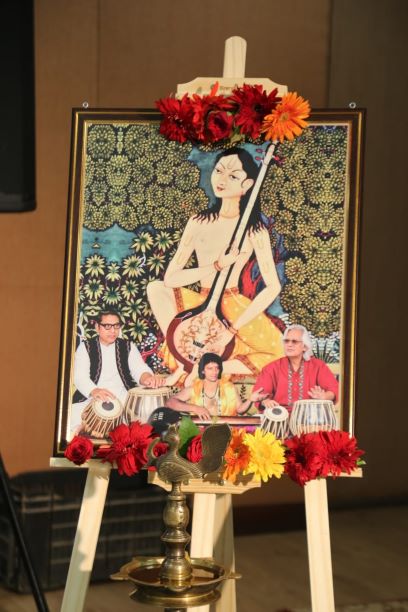
The Samaroh paid homage to three eminent personalities of Indian classical music: the legendary tabla maestro Pandit Shyamta Prasad Ji, his illustrious son Pandit Kumar Lal Ji Maharaj, and Swami Rasik Maharaj Ji, founder of the Nayak Baiju Bawra Sangeet Samaroh Committee.
A Vision Born of Devotion
The gathering was conceived and organised by Pandit Mudit Narayan Ji, a devoted disciple of Pandit Shyamta Prasad Ji, with the wholehearted support of his wife, Mrs. Nidhi Narayan Ji.
The evening began with an auspicious Deep Prajwalan in the presence of Dr. Aparna Bhajan Sopori, Ustad Akram Khan, Ustad Saeed Khan and Pandit Santosh Pathak, setting a tone of reverence and musical sanctity.
The Musical Journey
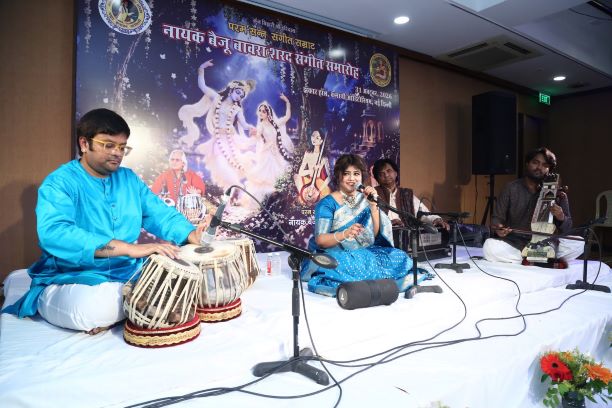
A soulful beginning in semi-classical vocal. Sushri Sarmistha Goswami opened the evening with Ragas Bhairavi, Sindhi Bhairavi and Pahadi. Her repertoire included the evocative thumri Hamri Atariya Pe, the dadra Rangi Saari Gulabi Chunariya Re and the traditional kajri Barasan Laagi Badariya. She showed a refined command of melody, raga-bhava and expressive gayaki. Shri Siddhant Mishra (tabla), Janab Arish Faisal (sarangi) and Ustad Nafees Ahmad Khan (harmonium) accompanied her with sensitivity.
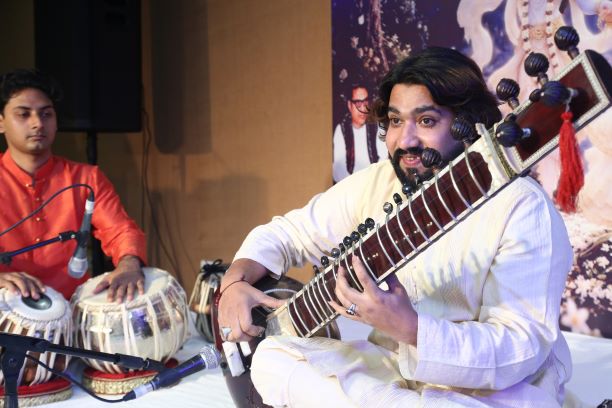
A sitar recital of rare sensitivity. The young sitarist Janab Adnan Khan presented Raga Puriya, unfolding it through Alaap, Jod and Jhala. His performance had intricate taankari, rhythmic improvisation and a spirited drut composition, with Janab Zargam Khan on tabla.
A vocal Jugalbandi of brothers.
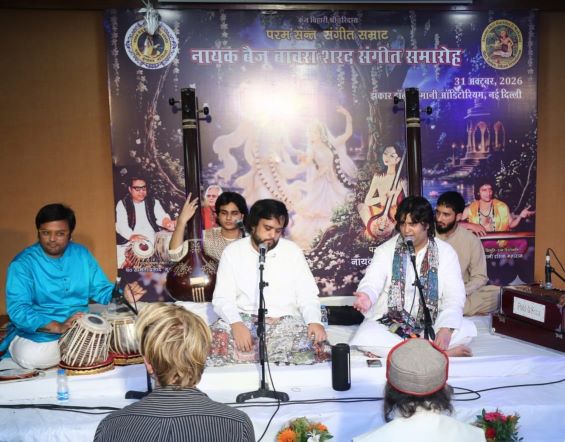
One of the highlights was the Jugalbandi of Ustad Fareed Hasan Khan and Ustad Mehboob Hussain Khan. They explored Raga Yaman through vilambit and drut khayal, with imaginative elaboration and remarkable rapport. Their rendition of Aaj Gawat Man Mero Jhoom Ke from the classic film Baiju Bawra, sung in Raga Desi Todi, was a fitting tribute to the spirit of the Samaroh. At the audience’s request, Ustad Fareed Hasan Khan also sang Garaj Garaj, which drew warm applause.
The thunder of the Banaras Gharana.
Pandit Santosh Pathak, a senior disciple of Gudai Maharaj and a disciple of Pandit Kumar Lal Ji Maharaj, presented a solo tabla recital. He combined traditional compositions inherited from the masters with his own creations, showing the powerful articulation, rhythmic sophistication and layakari of the Banaras baaj.
A grand finale of father and son.
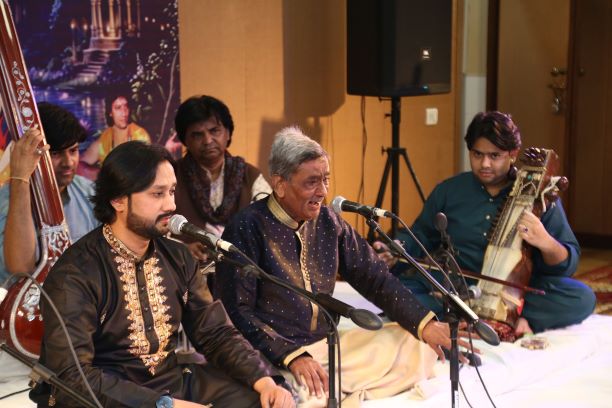
The concluding performance was a father-and-son vocal Jugalbandi by Ustad Mujahid Hussain Khan, Khalifa of the Rampur-Sahaswan Gharana, and his son Janab Shahbaaz Hussain Khan Niazi. They presented Raga Bageshri with a vilambit composition in Ektaal and two drut bandishes. Their meend, gamak, taankari and bahalawas brought out the raga’s emotional depth, and the recital ended with a Tarana in Raga Malkauns.
Shri Nishant Gangani (tabla), Shri Subhan Ali (sarangi) and Ustad Nafees Ahmad Khan (harmonium) accompanied them.
A Gathering of Luminaries
The evening was graced by many eminent members of the classical music fraternity, including Pandit Vinod Pathak, Pandit Vijay Shankar Mishra, Pandit Bholanath Mishra, Ustad Afzal Zahoor Khan, Ustad Ghulam Gaus Bharati, Pandit Ashish Narayan, Pandit Dishari Chakraborty and Ustad Amjad Ali Khan, along with other celebrated artistes and music scholars.
Shri Sushil Nadan anchored the programme with dignity and eloquence.
Honoring the Torchbearers
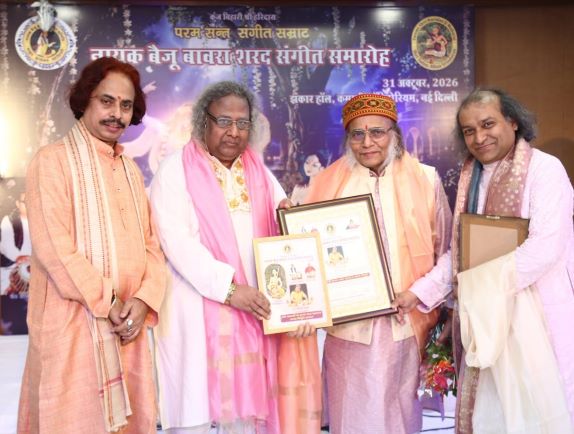
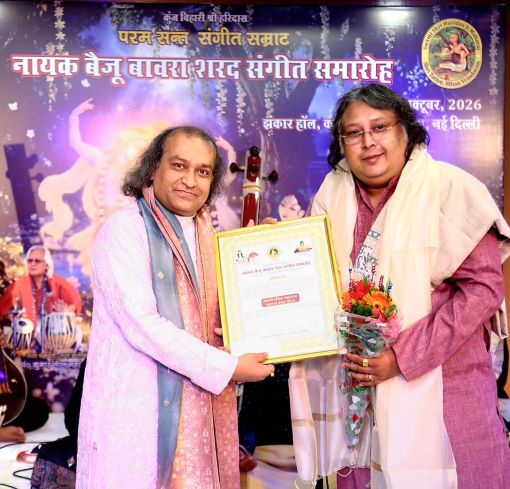
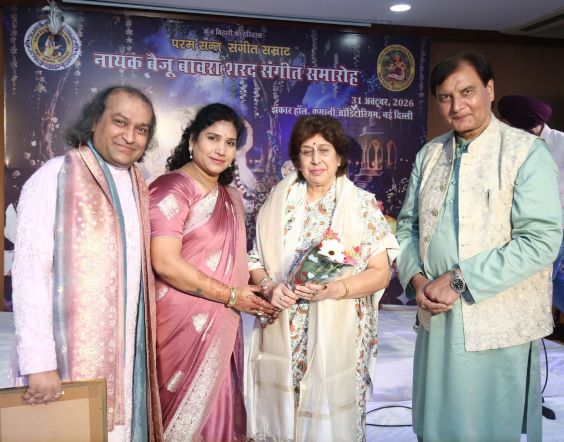
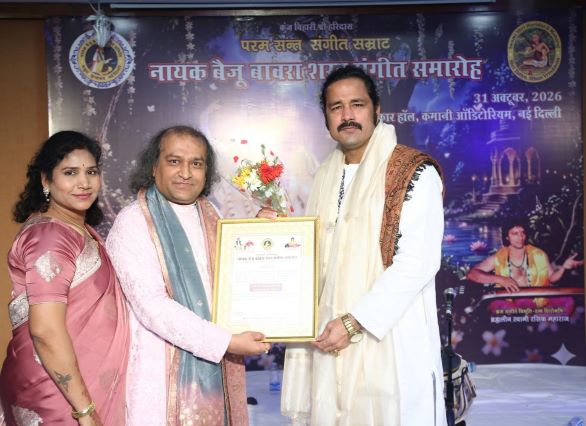
An important part of the evening was the felicitation ceremony, in which Pandit Mudit Narayan Ji honoured senior maestros, established artistes and emerging talents.
The honours included the Rasik Sangeet Rasraj Samman, the Taal Chakravarti Pandit Kumar Lal Maharaj Tabla Vibhuti Samman, the Taal Martand Samman and the Swami Rasik Maharaj Navratna Kala Gaurav Samman.
The Navratna Kala Dharohar Samman recognised personalities who have worked to preserve and promote music, spirituality and India’s cultural heritage. Young artistes and dedicated accompanists were also felicitated for their commitment to the continuity of Indian classical music.
The Soul of Hindustani Music
As the final notes faded, the Samaroh left a clear message.
The stature of Hindustani Shastriya Sangeet lies not only in brilliant stage performances or technical virtuosity. Its soul lies in the Guru–Shishya Parampara, through which each generation hands its knowledge, discipline, sadhana and musical consciousness to the next.
The Nayak Baiju Bawra Sangeet Samaroh was thus both a tribute to great masters and a sincere effort to preserve a living heritage. Its message was simple: Sangeet is not merely an art to be performed; it is a lifelong sadhana to be inherited, nurtured and passed on through generations.
Sadhana meets devotion, and music becomes eternal
🎵 #YathraBeats