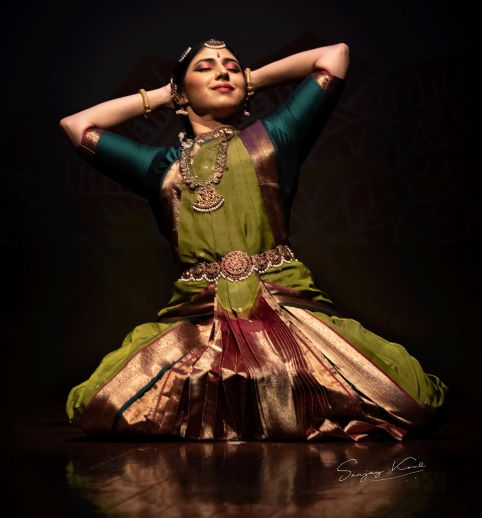
Posted on 14 September 2026:
🌸 #YathraRhythm
Poetry in Motion
Tanya Saxena: The Bharatanatyam Dancer Reimagining Classical Indian Dance for a Contemporary Stage
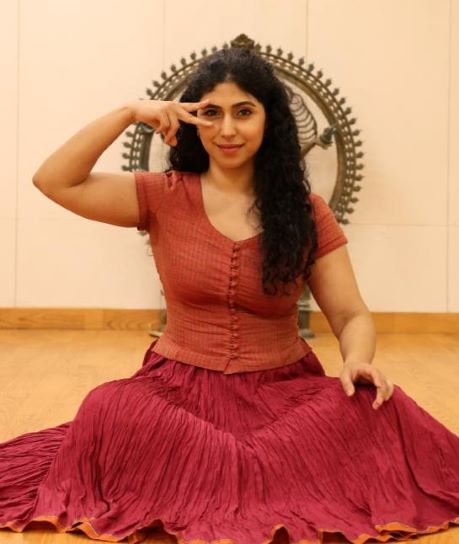
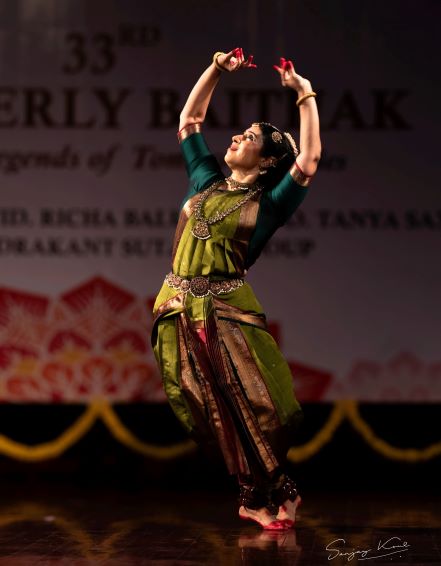
In a rehearsal room in New Delhi, the centuries-old grammar of Bharatanatyam is being rewritten — not discarded, but deepened. Here, amid the rhythmic strike of bare feet and the sculptural precision of hand gestures, dancer and choreographer Tanya Saxena is quietly redefining what a classical art form can hold. Her practice moves fluidly between temple tradition and modern storytelling, treating an ancient vocabulary as a living language rather than a museum piece.
“I am a Bharatanatyam dancer practising and teaching the art form in New Delhi, India. I have been studying dance since 2003; and professionally practising movement since 2013. My years of artistic exploration have pushed me to find my voice through the medium of what is considered a traditional, classical art form. It is via this lens that I view my practice — as a set of tools to craft stories of the present with bravery, sensitivity and a commitment to excellence.” — Tanya Saxena
Tanya’s artistic lineage reads like a map of Bharatanatyam’s living masters. She began her training under the legendary Dr. Saroja Vaidyanathan and Rama Vaidyanathan at Ganesa Natyalaya, making her solo debut — her Arangetram — in 2012. What followed was a decade of disciplined immersion: nattuvangam under Sajilal Narayanan, the Navarasa Sadhana actor-training technique with Kutiyattam maestro G. Venu, mentorship in the Karanas and Natya Shastra under Dr. Sujatha Mohan and Vithya Arasu, and guidance from Kamalini Dutt and A. Lakshmanaswamy.
Today, she continues to refine her craft under the celebrated dancer Mavin Khoo, a testament to her belief that mastery of a classical form is never truly finished.
This depth of training is matched by academic distinction. Tanya holds a Master’s in Performing Arts (Bharatanatyam) from Tamil Nadu University and, notably, a B.Sc. Honours in Mathematics from Hindu College, University of Delhi — an unusual pairing that hints at the analytical precision underlying her movement work.
Her accolades span both worlds: she is an ICCR-empanelled artist, an A-graded Doordarshan artist, a recipient of the Ministry of Culture’s Young Artist Scholarship, and was honoured with Hindu College’s Distinguished Alumni Award in Classical Dance in 2022. She even received a childhood accolade for poetry from President Dr. APJ Abdul Kalam — an early sign, perhaps, of the storyteller she would become.
WHERE TRADITION MEETS THE PRESENT
What distinguishes Tanya’s body of work is her insistence that classical dance can speak urgently to contemporary concerns. Her productions read less like recitals and more like meditations on the pressing questions of our time:
- Ikshana (2024) — a dance-theatre work confronting the climate crisis, presented by HCL Concerts across Pune, Bangalore, Chennai, and Delhi.
- Prayer Circle (2025) — an exploration of faith and ritual across different spiritual traditions, premiered at the Abhivyakti Arts Festival in Ahmedabad.
- Bindu — a movement film drawing inspiration from the abstract visual language of artist S. H. Raza, screened at the Erasing Borders Dance Festival in New York.
Her performance history stretches across India and abroad, including appearances at the World of Indian Classical Dance Festival in Ahmedabad, the Festival of India in Russia, and — most recently, in 2026 — a performance at the prestigious META (Mahindra Excellence in Theatre Awards) alongside Tal Fry.
ABHAYADANCE FOUNDATION
Beyond the stage, Tanya’s most enduring contribution may be institutional.
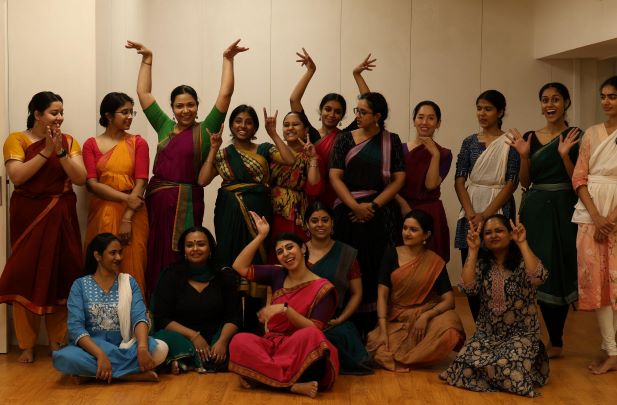
As Founder-Director of the AbhayaDance Foundation, she has built a home for Bharatanatyam dance-theatre in Gurgaon/NCR — a space where the classical form is treated not as a relic to be preserved under glass, but as a language still capable of growth.
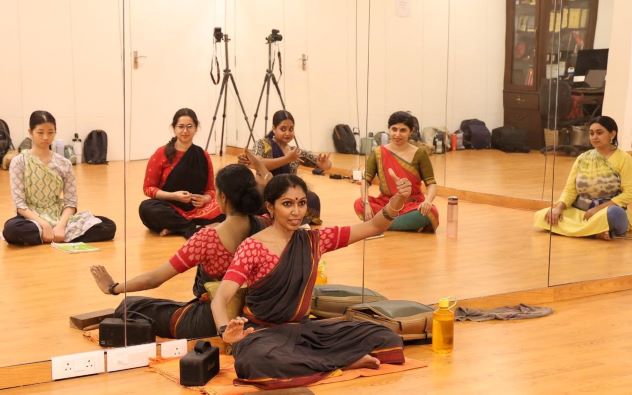
Through original productions, structured teaching programmes, and collaborations with visiting artists, AbhayaDance is cultivating a new generation of dancers and audiences alike, expanding what Bharatanatyam can mean in the twenty-first century.
In an art form often weighed down by the expectation of faithful repetition, Tanya Saxena offers something rarer: a practice rooted firmly in tradition, yet unafraid to ask what it might become next.
🌸 #YathraRhythm
Images: Tanya Saxena